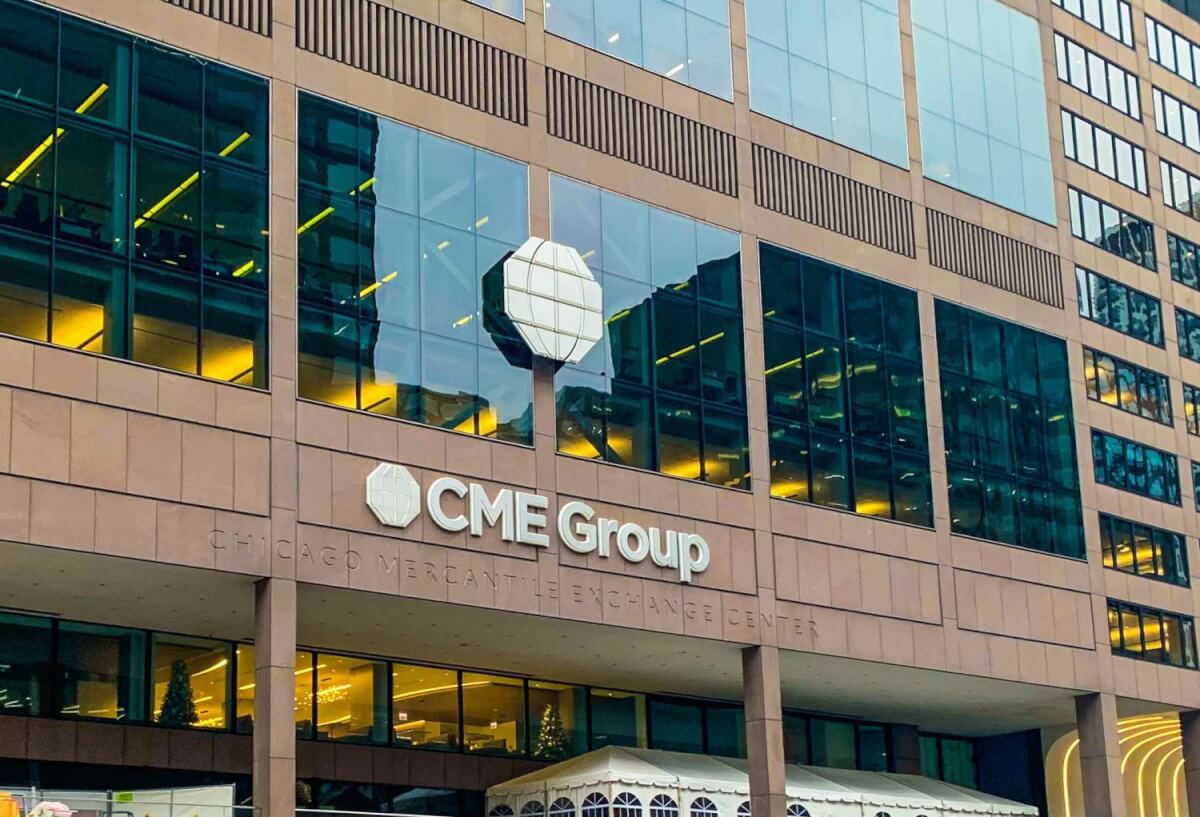
CME Group, the world’s largest futures exchange, has received a historical approval from the National Futures Association (NFA) to establish a futures commission merchant (FCM).
The NFA’s green light allows CME to offer futures directly to its clients on its platform, bypassing traditional brokers like TD Ameritrade, Saxo Bank, and Interactive Brokers公司.
Known as F&O Financial, CME’s newly approved FCM is set to offer futures services directly to clients, although it has yet to appear on the Commodity Futures Trading Commission’s (CFTC) official list of FCMs.
芝商所, which caters largely to hedge funds and proprietary traders, also operates CME Globex for futures and options trading, BrokerTec for fixed income, and EBS for foreign exchange. The Chicago-based group offers a vast portfolio of futures and options products across key asset classes—such as interest rates, equity indexes, foreign exchange, energy, agricultural products, and metals.
Additionally, CME operates one of the world’s leading clearing providers. As such, its latest venture led some derivatives dealers and other industry players to voice concerns over what they see as a potential conflict of interest, as CME will now act as both a futures exchange and a brokerage.
Interestingly, CME’s CEO 特里·达菲 previously warned of the risks posed by now-defunct crypto exchange FTX’s proposal to become a derivatives clearing organization, calling it a “risk management light” approach that could destabilize markets by removing up to $170 billion in risk capital and minimizing credit checks.
从历史上看, 流式细胞仪 have served as intermediaries in futures trading, handling trades and managing risk for clients outside of clearinghouse membership. This model relies on what’s called “risk mutualization,” where a diverse group of FCMs collectively manages the risks associated with large and complex trades, particularly in volatile markets like commodities.
Critics argue that CME’s move could threaten this balance by giving the exchange too much control over risk management and self-regulation, which they believe should remain decentralized across multiple firms for both transparency and market stability.
Supporters of the FCM model highlight its role beyond trade processing, pointing out that FCMs have innovated in areas like trade finance and risk management, which have been pivotal during periods of extreme market stress.
Meanwhile, FCMs were instrumental in handling defaults and crises involving major players such as Enron and Amaranth.
Proponents of disintermediation, however, argue that moving risk management to exchanges and clearinghouses directly could streamline processes and reduce friction in the market. They believe that by leveraging modern technology, these institutions could provide more efficient solutions and potentially lower costs for end-users.
Nonetheless, experienced market participants caution that technological solutions alone cannot replace the depth of expertise and risk management capacity that FCMs bring to futures markets.
- 标签 CME集团