The Securities and Exchange Commission (SEC) has adopted amendments to its customer protection rule, Rule 15c3-3.
The amendments require certain broker-dealers to change the frequency of their net cash computations from weekly to daily. The change aims to safeguard better customer and PAB (broker-dealer’s proprietary accounts) cash.
Daily calculations for brokers with over $500 million in average creditsUnder the new requirements, broker-dealers with average total credits of at least $500 million must conduct daily calculations. This allows firms to more closely align customer and PAB cash with the amounts held in their reserve bank accounts.
The SEC also adopted a related adjustment to Rule 15c3-3 and Rule 15c3-1, reducing the 3 percent “buffer” to 2 percent for broker-dealers that perform these daily calculations.
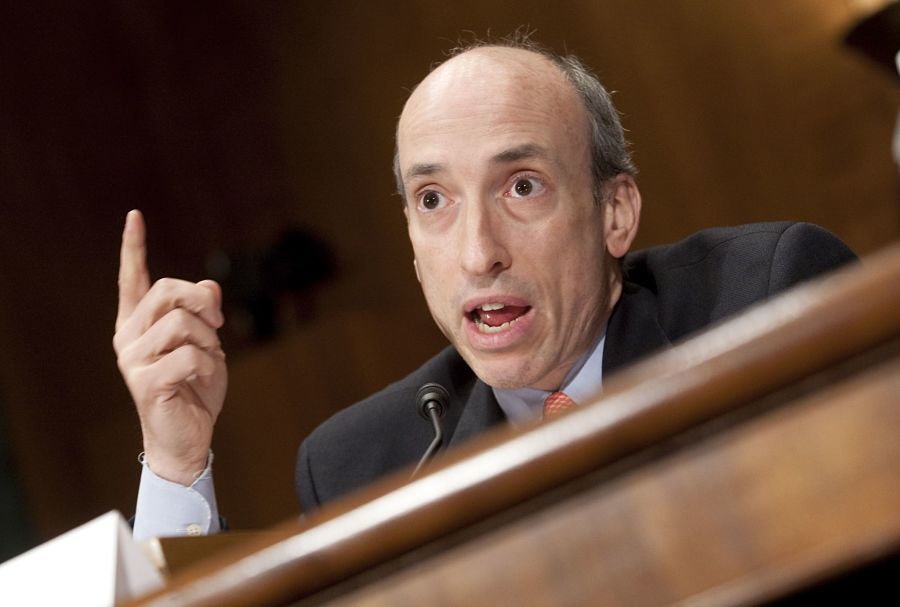
SEC Chair Gary Gensler endorsed amendments requiring large broker-dealers to compute and segregate customer balances daily, rather than weekly. He noted that these changes reflect the evolution of markets since 1972, when the Customer Protection Rule first took effect. He explained that daily calculations help reduce mismatches between segregated funds and cash owed to customers. Gensler also noted a reduction of the reserve “buffer” from 3 percent to 2 percent for broker-dealers performing daily computations. He highlighted that this step enhances market trust and protects the Securities Investor Protection Corporation Fund.
“Back in 1972, life was quite different”“Back in 1972, life was quite different. The public didn’t have access to the internet, smartphones, or social media. In the capital markets, we didn’t have anything that resembles modern electronic trading, and it took a full week to settle our securities transactions. Indeed, in 1972 we were just emerging from the paperwork crisis on Wall Street—in which stock exchanges literally closed from time to time because the back offices couldn’t keep up with the crush of paper.
“Today, a full half century later, is a very different time. The overwhelming majority of our markets trade electronically, and few Americans have even seen a physical stock certificate. Indeed, more than 95 percent of trades cleared through the Depository Trust Clearing Corporation are affirmed, confirmed, and allocated by 9:00 PM on the same day they’re traded.
“Suffice it to say, it’s time to update these rules,” Gensler said.
“The Customer Protection Rule requires broker-dealers that custody customers’ cash and securities to maintain a special reserve bank account that contains the net cash a broker-dealer owes to its customers. The rule, which we’re updating, currently requires broker-dealers to calculate and deposit the appropriate balance for that account on a weekly basis. Today’s amendments would change this requirement for the largest broker-dealers to daily computation rather than weekly.”
Nine of the largest brokers already make daily calculations“As discussed in the adopting release, nine of the largest broker-dealers already make these calculations on a daily basis. Today’s adoption would standardize this practice for an estimated 49 broker-dealers whose total credit balances averaged at least $500 million in 2023. As mentioned in the release, these 49 carrying broker-dealers held more than 99 percent of aggregate total credits of all carrying broker-dealers in 2023,” Gensler continued. “Today’s amendments are intended to reduce the likelihood of any mismatch between the amount of segregated funds and the net cash owed to customers and other broker-dealers. Further, lowering the likelihood of mismatches will help to protect the Securities Investor Protection Corporation (SIPC) Fund.
“In response to commenters, the adopting release also adjusts the amount of the required buffer that broker-dealers must maintain with regard to their customer reserve deposits. Under the current rule, as amended in 1975, certain broker-dealers must maintain an additional three percent in segregated funds. Under today’s final rule, those firms calculating their customer reserve formula daily will be able to reduce this buffer from three percent to two percent. As discussed in the adopting release, with regard to the large broker-dealers covered by the rule, the difference of one percent would have freed up a monthly average of $7.4 billion of liquidity in 2023 to use elsewhere in their business.”
“Final amendments may do more harm than good”SEC Commissioner Mark T. Uyeda reminded that there were some modifications to the final amendments in response to public comments, such as increasing the threshold for application of the daily calculation requirement from an average total credits of $250 million to $500 million and reducing the 3% aggregate debit items charge that certain carrying broker-dealers must take in performing a customer reserve computation to 2% when they perform a daily customer reserve computation.
“However, the final amendments do not adequately address a number of thoughtful public comments on the proposal and appropriately consider the trade-offs between costs and benefits. In my view, the Commission has not yet fully explored potentially more cost-effective means of achieving the sought-after risk amelioration. Indeed, many sensible suggestions in the public comment file appear to have been brushed aside in an attempt to rush it across the finish line. By failing to address these concerns, these final amendments may do more harm than good. As one commenter opined, “the Commission has gravely underestimated the staffing and time that will be needed in order to transition to daily calculations and deposits”.
“Our markets are characterized by different types of broker-dealer business models, some of which present greater risk than others in terms of customer protection concerns. The amended rule could have been more narrowly targeted to those riskier business models. For example, the final amendments could have utilized a hybrid calculation that included both average total credits and the broker-dealer’s overall net credit position as thresholds. One comment letter suggested, in addition to the total credit threshold, that an “average excess of credits over debits of at least $10 million or more” across the previous year would be also required as a threshold. Such ideas are worthy of further consideration before proceeding with the final amendments as is.”
“In the adopting release, the Commission appears to have looked past many suggestions from commentators that might potentially lower cost while still reducing risk. These suggestions include: (1) permitting the calculation and adjustments to be omitted on days in which markets close early; (2) permitting a broker-dealer to not conduct the calculation on given days if there are disruptions beyond the control of the broker-dealer that affect the execution of the calculation so long as the broker-dealer informs and works with their designated regulatory authority, and (3) codifying and simplifying “previous guidance making clear that firms need not deposit or maintain in special reserve bank accounts customer inflows that firms deposit into sweep programs or special reserve bank accounts on a same or next day basis.”[10] There may be unintended negative consequences to the market as a result of ignoring the opportunity to further explore these alternatives. For example, in the third suggestion above—what might be labelled the “cash in motion issue”—the danger is that, as one commenter described it, “firms might limit business with clients whose transactions involve large transitory credits, leading to a situation where only the largest firms (with substantial liquidity) can handle ultra-high net worth clients with large transitory credits … creat[ing] an anti-competitive landscape.”The Commission has a statutory obligation to take a close look at such possible anti-competitive effects.”
“I believe the amendments are net beneficial to investors”SEC Commissioner Hester Peirce also criticized the final amendments. “It will increase costs and operational challenges for 40 of the estimated 49 carrying broker-dealers that will be subject to this daily computation requirement, and the rule could have done more to address the treatment of funds that will be placed in sweep accounts on the next business day. On the other hand, the final amendments do incorporate an increased threshold for triggering the requirement that mitigates some of the costs. In addition, it allows carrying broker-dealers that use the alternative method for net capital and perform a daily customer reserve computation to reduce their aggregate debit items by 2% (instead of the 3% that is currently required). On balance, I believe the amendments are net beneficial to investors.
“I hope that broker-dealers will take the Commission up on its invitation to engage with the staff on potential issues in dealing with what one commenter called “cash in motion.” I also look forward to receiving feedback on any operational challenges that arise as broker-dealers implement these requirements, particularly with respect to exigent circumstances and potential challenges with resources around holidays and days when the markets close early.”
- 标签 经纪商, 保护规则, 秒